top of page

All Posts

Sometimes getting out and around people can reality check you, in a good way. I am someone who has always loved fashion, loved modifying it, looking at it, switching it up, etc. I'm not very good at making it but I will design a line in this lifetime! (My family of seamstresses are probably disappointed by my inability to sew despite their best effort). It is just something I've always loved. It can be really important to get out and just talk to people, to interact, and to realize that the voice in your head that tells you you're invisible is actually the only thing making it true.


I recently went to an event. I sat down and the person next to me (amazing human btw) commented on my style and I joked that "well it better be good my business is about style." It came up a few times and reminded me I started this business because I believe in it and I love it! Sometimes you can get so in your head about things that you forget that people can see you. My level of comfort in my own body has fluctuated over years through situations, medications, and all that. I always felt too thin on the bottom and too thick on the top. I now endearingly call it my lollipop-shaped body. I only know of two other people that have the same body shape as me. Actually three, but one of them is not real. I freaking adore all of them. One is my mom, which is not that surprising, you know cuz we're related. The second is Celina SpookyBoo. The third is the one and only Lady Glitter Sparkles (Trolls).


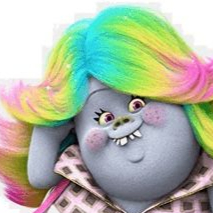
I see pictures of my mom and her little lollipop body and expressions and it just makes me happy. To see that in myself is emotional for me now that she has passed. There is a story that has that really has been coming up in my mind a lot recently. My mom was a stoner; that's not the story; that's just a fact. When she would get super high and silly, which was always refreshing, her eyes get really squinty because she has big old apple cheeks. I always thought her face looked like a smiling Buddha when she was high. I wanted to get a little Buddha tattoo that said "Buddha Mama." Some time in the years leading up to her death, I realized that she thought I was referring to her belly. I did joke about a lot of her physical things but so did she. Now it is what it is. Karma does what it does. Genetics does what it does. Anyway, I explained to her that it was because of her smile and not because of her body.


The fact that she was still very excited about the tattoo idea is telling. Her self image and my lack of realizing it created this completely different interpretation of something that is really a symbol of connection and joy in life. It's a reminder that the way that we see other people, especially people we love, the things about them that we love, don't have anything to do with societal norms or outward perception. It is a reminder to trust the people that love us, to trust their love. I listened to a reading today that reframed this for me. It said:

"It's easier to love others because you have control. It's much harder to be loved and be open to being loved because you don't have control over it." It is a gift to find the joy in who you are be through fashion or other ways of self-expression and connection. Health and stuff is important, of course, but health is a dynamic system, not just your body, not just your mind, and not just your soul. They have to work together.


Charlesice, 3RD IRIS Founder, reviewing journals

I was getting in my head about trying to find an outfit for the pitch and making sure that I would convey I know something about style. What actually worked though was just me going in my closet, being like, "I like this, this, and this. They go together; it's totally gonna be cute with my shoes, cool beans," doing my makeup in less than 10 minutes and eating it up. From people on the freaking metro to the event, my presence counted more than my look and because I was so just immersed in talking about the idea and the business that I didn't really think about it. Sometimes it takes going out and meeting people to realize that "Maybe I'm not invisible. Maybe my hair does look good. Maybe the way I feel comfortable in this dress is more important than how someone thinks I should look." Visibility starts within.


Dark academia looks like everything I was taught to want: heavy wool coats, battered books, Oxfords echoing down stone hallways, coffee cooling beside a half‑finished draft. It sells us a fantasy where learning is decadent, suffering is romantic, and a blazer can turn a burned‑out grad student into a tragic heroine.


I know that fantasy from the inside. I was the first‑gen kid who used homework to drown out screaming in the next room, the teenager who realized education might literally be a way out, the adult who ended up in a PhD program and later working at NIH. For people like me, school was survival, it was life.


That’s why dark academia as a fashion trend sits so strangely with me. On the surface, it’s just “boarding school meets goth enthusiast”: tweed, turtlenecks, pleats, loafers, dark lipstick, a moody palette of black, forest, burgundy, and tobacco. Underneath, the visual language is built from institutions that have always been about gatekeeping. Elite universities, old boys’ clubs, secret societies, and spaces that historically excluded women, poor and working‑class kids, and people of color.


Misogyny and elitism show up in who gets harassed, who gets believed, whose clothes are considered “professional,” whose body is watched more closely in the hallway. I’ve watched trainees in crisis because the system they worked their whole lives to enter turned out to be hostile, extractive, and indifferent to their mental health. Online that same system is romanticized: depression as a candlelit desk shot, insomnia as “study grind,” institutional violence as a cute Latin quote.


None of this is abstract. You have to be wealthy, white, cis, able‑bodied, and male to belong. The 19th News published a powerful piece by Jessica Kutz critically examining the receipts for how deep the boys’ club runs. Recent releases of the Epstein files show powerful scientists and funders explicitly strategizing to keep women out of elite STEM spaces, mocking their bodies and doubting their intelligence in writing. That’s the same ecosystem dark academia romanticizes: the conferences you’re not invited to, the fellowships you never hear about, the rooms where your body and your outfit are discussed before your work.


If the only way to be read as “serious” is to cosplay the old regime, then are our clothes are protecting us by erasing us?


I’m not interested in telling people to stop loving dark academia or to claim that fashion can fix these broken systems. I just want us to imagine what happens if we keep the intellectual drama and mood, but change who the silhouette centers? Swap the Eurocentric prep school references for alt silhouettes, disabled and fat bodies, Black and brown romantic leads, trans scholars in lace and leather who don’t have to tone themselves down to be believed. What if “academic” means corsets over hoodies, Docs with sari fabric, harnesses with thesis drafts? If they are going to talk anyway, why not give them something to chew on?

I don't believe that dark academia is worth romanticizing generally, but I do believe in romanticizing . the desire for thought, depth, mystery, study, and community. Those are the parts I want to dress for.


3RD IRIS is my refusal to let elitist institutions own the look of being a thinker.


In the voice of the nostalgic mesothelioma PSA: If you or a loved one recognize this quote, you may be entitled to compensation! Thousands of men and women were exposed to emotional damage by the 1994 film, The Crow. If you do not, change that and go watch it cuz spoilers ahead. JUST KIDDING, well watch at your own risk because it is a violent and tragic story. In short, the story follows Eric Draven, the Crow, as he murders a series of gang members slowly one at a time. Each of the members played a significant role in brutally assaulting and murdering the love of his life, Shelly, and himself, the night before they were set to be married.

Eric Draven from the classic 1994 film.
Eric Draven in the original 1994 film.

The film flashes between two timelines, the night of the assault and the present, one year after. Sergeant Albrecht and Sarah are characters that interact throughout the present providing the few moments of comedic pause in the film. That being said, their connection to the story is not trivial by any means. Sergeant Albrecht was the officer that answered the call a year earlier and that had been ultimately demoted to "beat cop" for seeking justice. Sarah is revealed to be the young girl that Eric and Shelly often looked after while her mom was off partying and doing drugs. The phrase "it can't rain all the time" in the film represents the moment that Sarah realizes that Eric is somehow back.

Sarah and Sergeant Albrecht from the original 1994 film.

The recording of the film was itself soaked in blood as the actor playing Eric Draven himself, Brandon Lee, was killed on set by a live round that should have been a blank. Brandon Lee died following in the footsteps of his father, the legendary martial artist and actor, Bruce Lee. Regardless of what part of the story someone resonates with, it is likely a deep wound. The most uplifting sentiments of the film exist in the context of a messy and violent story of love lost.

Back of neck tattoo with words "it can't rain all the time" above a crow.
One of the matching tattoos I have with my Shelly.

p.s. I was writing about the movie and got caught up in the feel of so much I forgot why I had actually started writing it here. I relate deeply to Sarah. The phrase "it can't rain all the time" often saved me, and seeing myself dressed the way I wanted, with fishnets, boots, and chains, was empowering, even if I never mastered skateboarding. Her walking through the rain and being frustrated and then feeling a glimmer of hope and choice has always resonated with me.


The Crow is an iconic movie, stylistically dark and violent, with imagery deeply ingrained in my identity and alt-expression.


bottom of page